STORY AND PHOTOS BY RYAN HALL | RURAL MONTANA EDITOR
There is only one made-in-the-USA wool brand from sheep to clothing in the United States, and it’s based just outside Dillon.
Duckworth clothing is co-owned by Vigilante Electric Cooperative member John Helle, whose family shears nearly 10,000 sheep each year to provide about 80,000 pounds of wool for the clothing brand. They also buy another 180,000-plus pounds of U.S. wool. The wool is spun, dyed and stitched in factories across the U.S., said Evan Helle, John’s son. He noted that Duckworth products are produced in more than 30 factories across 17 states, with many of the factories specializing in one part of the process or one garment. Products include everything from socks and base-layer garments to performance wear and coats.

The crimps in this wool gives it an elastic property when it is made into yarn. | Photo by Ryan Hall
“We’ve taken the itchiness out of it and developed wool for next to your skin, which is the best place to put it,” John said.
The Helles raise Rambouillet-Merino sheep, which produce a very fine wool. Generations of refining genetics have made the Duckworth wool finer, softer and less itchy than most other wool produced in the U.S. That itchy blanket many people remember from their youth is not among the many Duckworth products.
“Not on this ranch,” John said with a laugh.
In the beginning
John’s grandfather started the ranch in the late 1920s or early 1930s, adding adjoining land as he could.
“Land was cheap if you wanted to work hard,” John said.
He noted that between the ranchland and leases, their sheep now have access to about 100,000 acres of grazing land, including federal mountain land leases.
“One thing people don’t realize is that the mountains are actively managed by agriculture. The national forest summer grazing allotments allow us to have the ranch. If we didn’t have the allotments, we would be a quarter of the size we are,” Evan said, adding the ranch appreciates being able to team with the U.S. Forest Service to manage the land.
“That what makes what we do so sustainable,” he said.
In 2014, John Helle, John Edwards, Graham Stewart and Rob Bernthal formed Duckworth clothing to vertically integrate the wool business, making a truly Made-In-America product.
The mission statement is simple:
To revitalize the American wool industry through American manufacturing.
“We pretty much are the only ones in the U.S. doing what we do,” Evan said.

The company started with a retail store model until the pandemic hit in 2020, and many stores closed their doors for months.
“We had to pivot our whole company around to online direct,” John said. “It was the perfect model.”
The ranch and Duckworth are family businesses with John, Evan, Evan’s brother Weston and John’s brother Tom all working on different phases of the operation. Evan has a business management degree, John has an animal science background, Tom is the tech manager and Weston has a range-science degree.
More than just shearing
Wool production is a science at the ranch. Everything is done with the goal of producing the best wool for each product, and ensuring that future generations of sheep are even better at it than today’s generation.
On this day, there are four shearers, all from Montana, working through a set of young rams. Each time a shearer grabs a ram, one of the Helles uses a wand to read the ear tag on the sheep. A label is printed and paired with the wool once it is sheared. The wool is then laid out on a round table with slats in it. Crew members shake any dirt off the wool and pick out any bad pieces. From there, it is taken to a station to be checked for quality.
John’s brother Tom takes a small sample of the wool and gives it to Liz Maxwell of the Montana Wool Lab at Montana State University (MSU) – one of only two such labs in the country. Maxwell scans the label and puts the sample in a machine, which scans it and records the length, thickness, curvature, crimp (elasticity), comfort factor (averaging 100 percent this day) and other data. A larger sample will be tested at the lab later for strength. That data can then be used by the Helles to refine the genetics of the herd to continue producing the best wool.
“(The Montana Wool Lab) has just been instrumental in helping us apply the technology,” John said.
A new age of wool
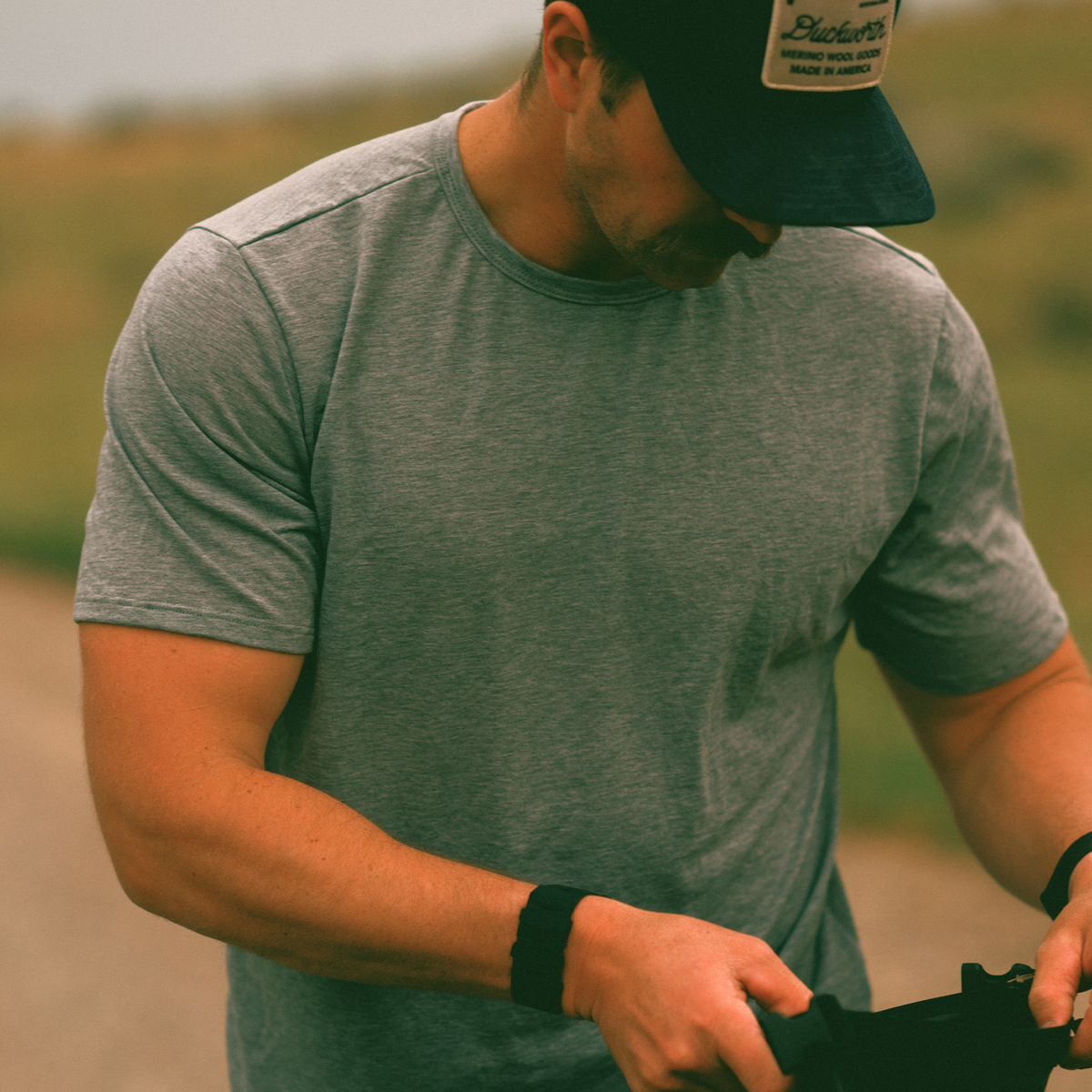
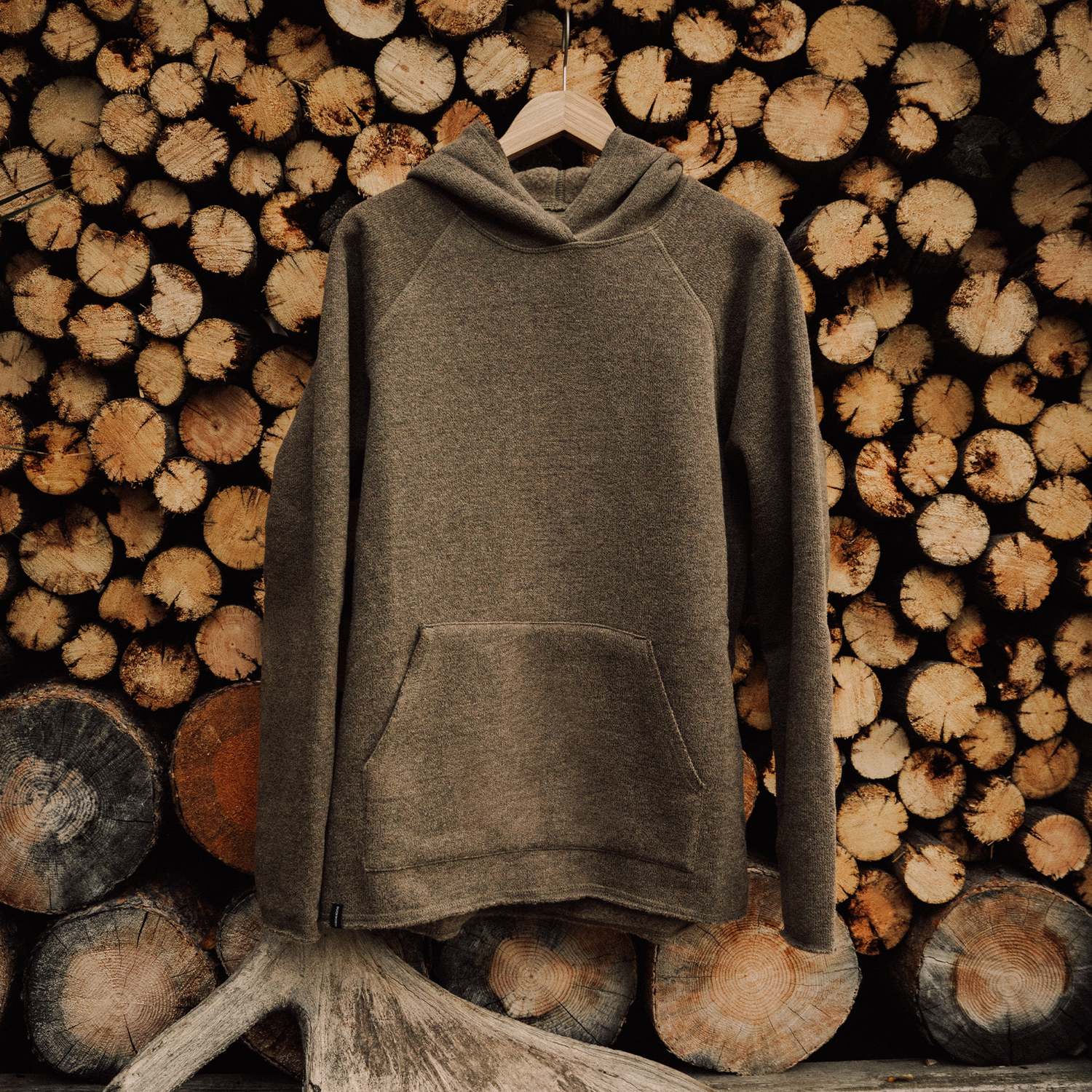
The Helles note that Duckworth is a different kind of wool clothing company than most people would expect. Longjohn base-layers, athletic moisture-wicking clothing, sweatshirts that stay tight at the waist and cuffs without elastic, various coats and high-performance wool socks are all in the product line.
John said that while many people think of wool socks as bulky and tending to fall down, that isn’t the case anymore. Modern wool socks hold their shape, are lightweight and more comfortable.
“The wool sock business in America has been really good,” John said. “The socks are the gateway drug to wool (products). People try the wool socks then move to base-wear.”
Evan said that Duckworth clothing is pricier than some options because of its quality and durability. As he spoke, the Helles worked on the line moving wool back and forth, all wearing Duckworth shirts, coats or sweatshirts that had stood up to the elements and various hazards of working with sheep and machinery day after day.
“American factories have a style of overbuilding (the products they produce), so our products are made to last,” Evan said.